

By Michael Williams
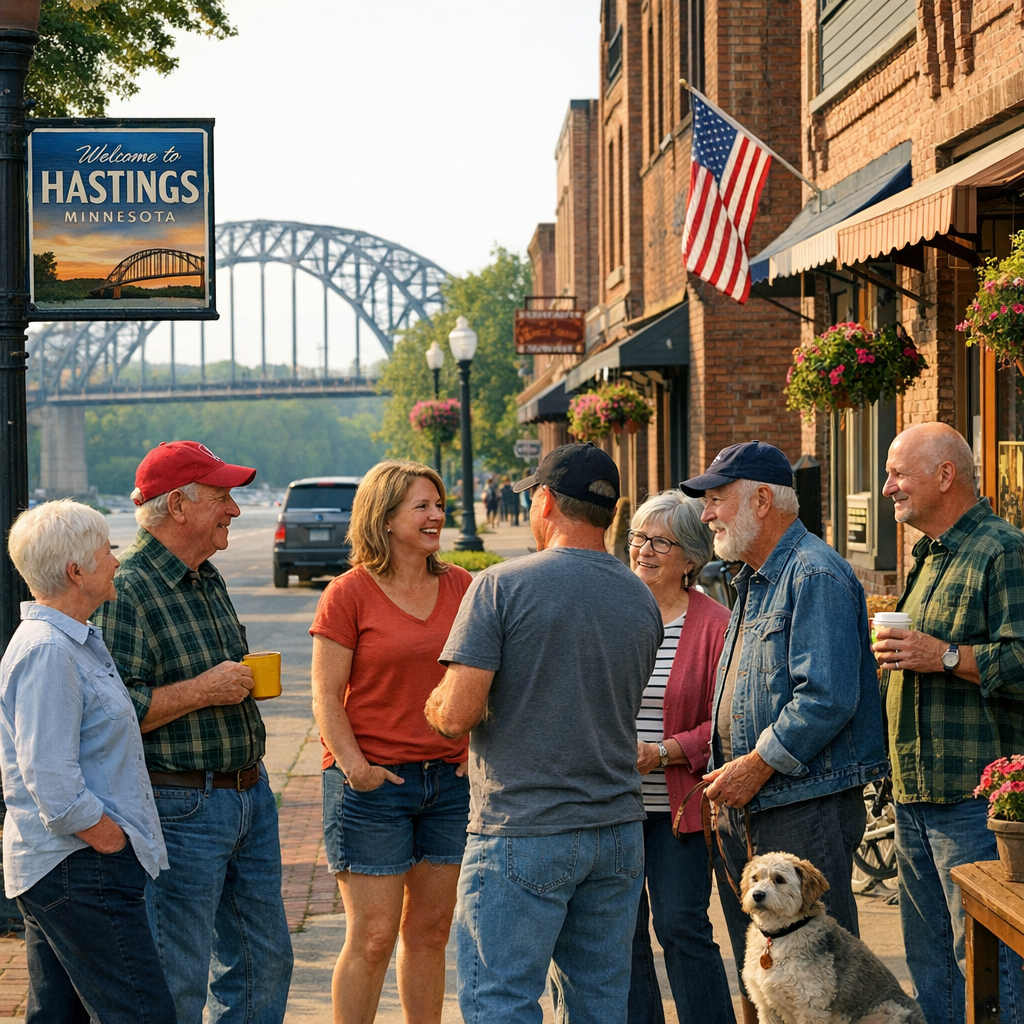
Hastings is more than the picturesque bluffs, the winding rivers, or the charm of Main Street—it’s its people. But lately, I’ve been hearing recurring questions from many of you: What does community really mean when we feel stretched by rising costs, political division, or the loss of familiar neighborliness?
The Pulse of Connection
Whether at the dog park, in line at the bakery, or in the stands cheering for Hastings High, there’s often a warm nod or short pause to ask how things are going. These moments matter—more than we often realize. They are the threads that make this community a “home” rather than just a place where we live.
Several residents have shared memories—and worries—on social platforms. One newcomer spoke of slipping on ice, breaking her leg, and experiencing how neighbors rallied: walking her dog, watching her house, bringing dinner. That kind of kindness shows Hastings at our best. But others say those moments feel less frequent, underscored by growing concern that “the charm has shifted” as more people move in and times get harder. (This reflects feedback on sites where people share what they love and what they miss about living here.)
Challenges That Cut Close
Affordability is real. At a recent Hastings City Council meeting, neighbors voiced concerns about rising fees and taxes—and some said they don’t feel like they can afford to stay. One proposal discussed was removing or reducing fees on services like tree removal to ease the burden on homeowners. It’s evidence that changes in city policy impact everyday choices—where to shop, stay, or even whether to stay at all.
Younger folks, teens especially, are also raising their voices: “What’s there to do that isn’t just sports or driving into the Cities?” “Can we have more spaces where we can be creative, meet people, or learn something new?” These are not just passing complaints—they point to a gap in how we think about community resources and youth engagement.
Division and Belonging
Another recurring theme: belonging. Some in our community—especially those from nontraditional backgrounds, or who feel “different” in culture, belief, or identity—say they see Hastings as conservative and tightly knit, for better and worse. Friend or foe, neighbor or stranger—these lines can feel drawn.
Stories of hurt—whether from someone being outed publicly, feeling excluded, or hearing offhand prejudice—are hard to hear but vital to acknowledge. Belonging isn’t just about sharing space; it’s about feeling safe in it. When diversity feels like a tension rather than a strength, the ties that bind start to fray.
What Community Voices Suggest
- Bring people together beyond traditions—more creative spaces, youth programs, and public forums where people feel heard.
- Address affordability by expanding financial assistance for city services, utility fees, and community infrastructure.
- Celebrate what Hastings has done well—neighborly care, beautiful places—but don’t ignore the gaps in inclusion.
- Create paths for those who feel outside the loop—different identities, newer arrivals—to feel that Hastings is theirs too.
Looking Ahead
None of these challenges are unique to Hastings—but because our town is smaller, they often feel closer and more personal. When the cost of living climbs, when voices feel unheard, when belonging feels conditional—community weakens.
Yet there’s hope. I see people stepping up: businesses adjusting to help others, neighbors tending to shared spaces, artists and entrepreneurs creating connection where there was none before. If we’re willing to talk honestly, to include openly, and to build intentionally, Hastings can grow—not just in population or infrastructure, but in heart and soul.
Living here means choosing one another, even when it’s hard. And that’s where community begins again.